What Does RSVP Mean on an Invitation? A Plain Guide
Published: 1 August 2026·Türkçe oku
If you have ever turned an invitation over and wondered what does RSVP mean on an invitation, the short answer is that it is a request for an answer. Those four letters ask you to tell the host whether you will be there. That is the whole of it. The confusion lives in everything around it: by when, to whom, does a no count, and what happens when half the guest list says nothing.
Where RSVP comes from
RSVP is an abbreviation of the French phrase répondez s'il vous plaît, which means "please respond" or, more literally, "respond, if you please". French was the language of court etiquette across Europe for a long stretch, and a few of its formulas stayed attached to formal correspondence long after the fashion passed.
You will see it written RSVP, R.S.V.P. or lowercase rsvp. All mean the same thing. You will also see "Please RSVP", which technically says please twice, since the please is already inside the abbreviation. Nobody minds, and if it makes your invitation clearer then use it.
What the host is actually asking for
An RSVP line asks for four things, even when it only spells out one or two:
- A yes or a no. Both are useful. A no lets the host release a seat, a plate and a place card.
- A number. Two of you, or four, or one. Only the people named on the invitation.
- A reply before a date. After that date the host has to guess, and guessing is expensive.
- Sometimes extra details. A meal choice, an allergy, a song, whether you are bringing children.
The part guests most often get wrong is reading RSVP as "tell us if you are coming". It means tell us either way. A host who has heard nothing cannot tell a definite yes from a guest who never saw the invitation, or from one who read it in a queue and forgot.
How to word the RSVP line
Write the line so that a guest reading it once, on a phone, knows what to do: name the date, the channel and the person. Examples across the range of formality.
Formal, for engraved or printed wedding stationery:
- The favour of a reply is requested by the fifth of September.
- Kindly respond on or before 5 September 2026.
- R.S.V.P. by 5 September to Ayse and Mert, hello@example.com
- The honour of your reply is requested before the fifth of September.
Semi-formal, warm but still tidy:
- Please let us know by 5 September so we can save your seat.
- RSVP by 5 September. Tap the link below and tell us yes, no or maybe.
- We would love to know if you can join us. Please reply by 5 September.
Casual, for birthdays, engagements and house parties:
- Coming? Tap yes, no or maybe by 5 September.
- Let us know by 5 September, and tell us who you are bringing.
- Reply by 5 September so we know how much cake to order.
Three details are worth spelling out rather than implying. Say who is invited, because "and guest" and "the whole family" mean different things to different people. Say where children stand. And give one channel, not three: a reply arriving by text, by email and as a comment under a photo is three chances to be counted twice. Our wedding invitation wording examples cover the lines around the RSVP.
How to set an RSVP deadline, and why it matters
Your RSVP date is not really about the guests. It is about the last moment you can still change your order.
Work backwards. Caterers and venues usually want a final head count some days before the event. Set your deadline about a week earlier than that, so you have a window to chase without a supplier waiting on the phone. Common practice looks roughly like this:
- Weddings and large seated events: three to four weeks before the day.
- Destination weddings or anything needing flights: six to eight weeks, because guests must book before they can promise.
- Birthdays, dinners and small gatherings: one to two weeks is plenty.
- Open house or drop-in events: a soft date, or none at all.
Resist the urge to set it very early. People cannot see six months ahead, and an early deadline mostly produces maybes you must confirm again later.
What "regrets only" means, and why it usually backfires
"Regrets only" means: reply only if you cannot come. Silence is counted as a yes.
The appeal is obvious, fewer messages to read and fewer names to tick. The problem is that it makes silence mean something, and silence is the least reliable signal you have. A guest who says nothing might be coming, might have lost the invitation, or might have meant to reply and never did. So you end up chasing anyway, except now you are chasing the people you had already counted as attending, a week before the event, with a catering order in your hand.
There is a quieter cost too. Regrets only tells guests that their answer is optional, and people treat it that way. Ask for a reply either way and most of them give you one.
It does have a place. For an elastic head count, a drop-in afternoon or a buffet where twenty more will not break anything, it is fine and kind. For assigned seats, plated food or a per person cost, ask everyone to reply.
What to do about guests who never reply
Start from the assumption that the message got lost, not that the person is rude. It is nearly always true, and it keeps the tone right.
- Send one gentle reminder about a week before the deadline, to everyone still outstanding. Keep it short: the list is being finalised, here is the link again.
- After the deadline, go personal. A group message will not move the people a group message already failed to move. An individual message or a phone call will.
- Ask a closed question. "Can I put you down as two?" is far easier to answer than "let us know your plans". Give them a yes to press.
- Delegate by relationship. Your aunt will answer your mother in a day. Split the remaining names among the people closest to them.
- Set an internal cut off and say it kindly. "We give the final numbers on Friday, so without a reply we will assume you cannot make it."
- Keep one list. Not memory, not four chat threads, not a photo of a handwritten page. There is more on this in our guide to tracking wedding RSVPs.
How digital RSVP works
A digital invitation is a web page with its own address. You send the link, the guest opens it on their phone and taps an answer: coming, maybe, or cannot make it, with a head count and a short note if they want. That answer lands in your list straight away, with a running total.
This removes the two things that break paper RSVPs. There is no reply card to lose, and no gap between the guest deciding and you finding out. It also lets a guest answer in the few seconds they have while the kettle boils, which is when most people answer anything.
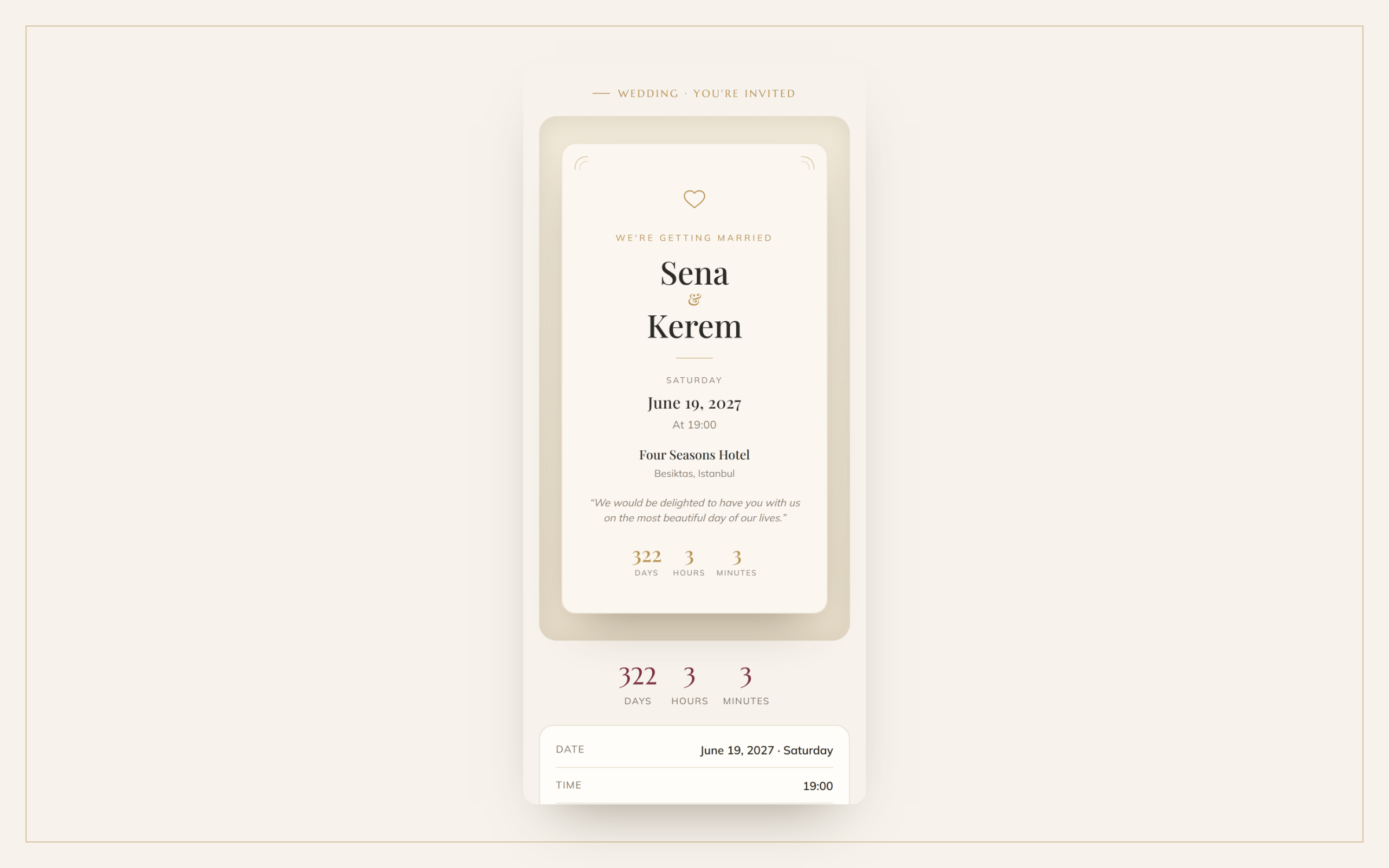
InviteMyDay works this way. You choose one of six themes, fill in the details, and share the link on WhatsApp with one tap. Replies come back with head counts and notes, and the invitation itself carries a countdown, an add to calendar button and a map link. Guests do not install an app or create an account, and every extra step between the link and the answer costs you replies. It is 19.99 EUR + VAT per invitation, with unlimited guests.
Quick answers
- Do I have to reply if I cannot come? Yes. A clear no is genuinely helpful.
- Can I reply for my whole family? Only for the people named on the invitation. If you are unsure, ask.
- What if my plans might still change? Give your best answer before the deadline and tell the host the moment it changes. Late news beats no news.
- Is regrets only the same as RSVP? No. RSVP asks everyone to answer. Regrets only asks just the people who cannot come.